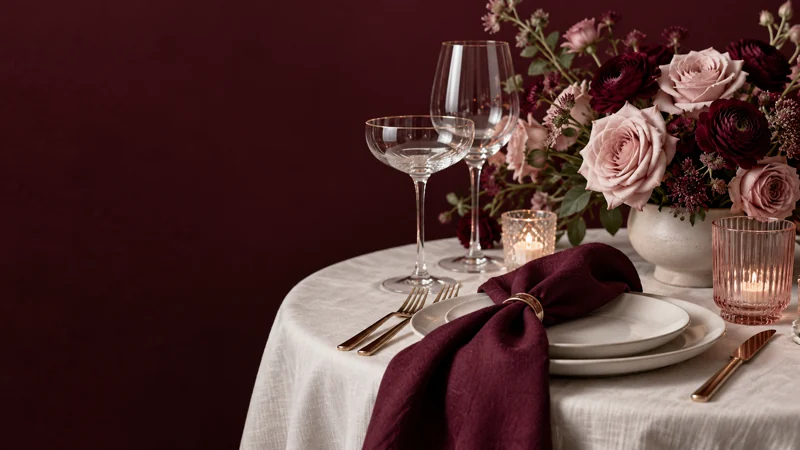
Find the thread that connects the day
A colour, a flower or a shared interest can give the details a starting point. It does not need to become a theme applied to every surface. A few deliberate choices often create a more natural atmosphere.
Consider the surroundings and the time of day alongside the palette. Materials look different in changing light, and a table should remain comfortable to sit at as well as beautiful to look at.
Let the table invite conversation
The place setting, the scale of the flowers and the space between seats all influence how dining feels. Think about what guests can see across the table and where the practical items will sit.
Personal details can be small: the way a menu is folded, the choice of a ribbon or a meaningful colour carried into the linen. They should leave enough room for the meal and the people sharing it.
Make room between the moments
A full schedule can leave little time to enjoy what has been planned. Build the day around a few important moments, then consider the transitions and the pauses that make them feel unhurried.
The exact arrangements depend on the people and the setting. A written running order is useful, but it should support the celebration rather than make every minute feel like a deadline.