Write a simple outline
Start with the purpose of the event, the intended format and the important moments. A short outline is easier to share and revise than a collection of unrelated ideas across different messages.
Separate decisions that are settled from those still being explored. It is helpful to know whether a detail is essential to the occasion or simply one possible way to achieve a feeling.
Consider the whole table
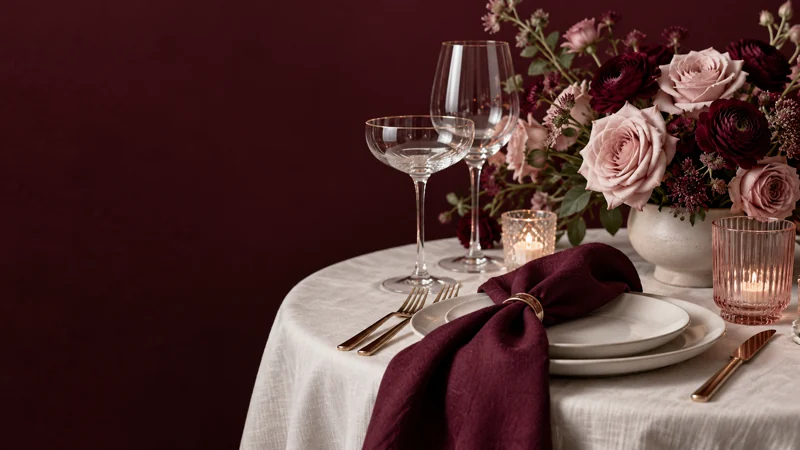
Linens, glassware, flowers and place settings have to work together in a limited space. Think about the footprint of each element and the room needed for serving and conversation.
A sample arrangement can reveal practical issues that a mood board cannot. It also makes it easier to simplify the design while keeping the parts that give it character.
Join up the transitions
Arrival, seating, food and any speeches or activities should form a natural sequence. Leave time for people to move, find their place and enjoy the change in pace.
Keep the final outline clear enough for everyone involved to understand their part. A shared record of timings and responsibilities is more useful than a perfect-looking plan that only one person can follow.